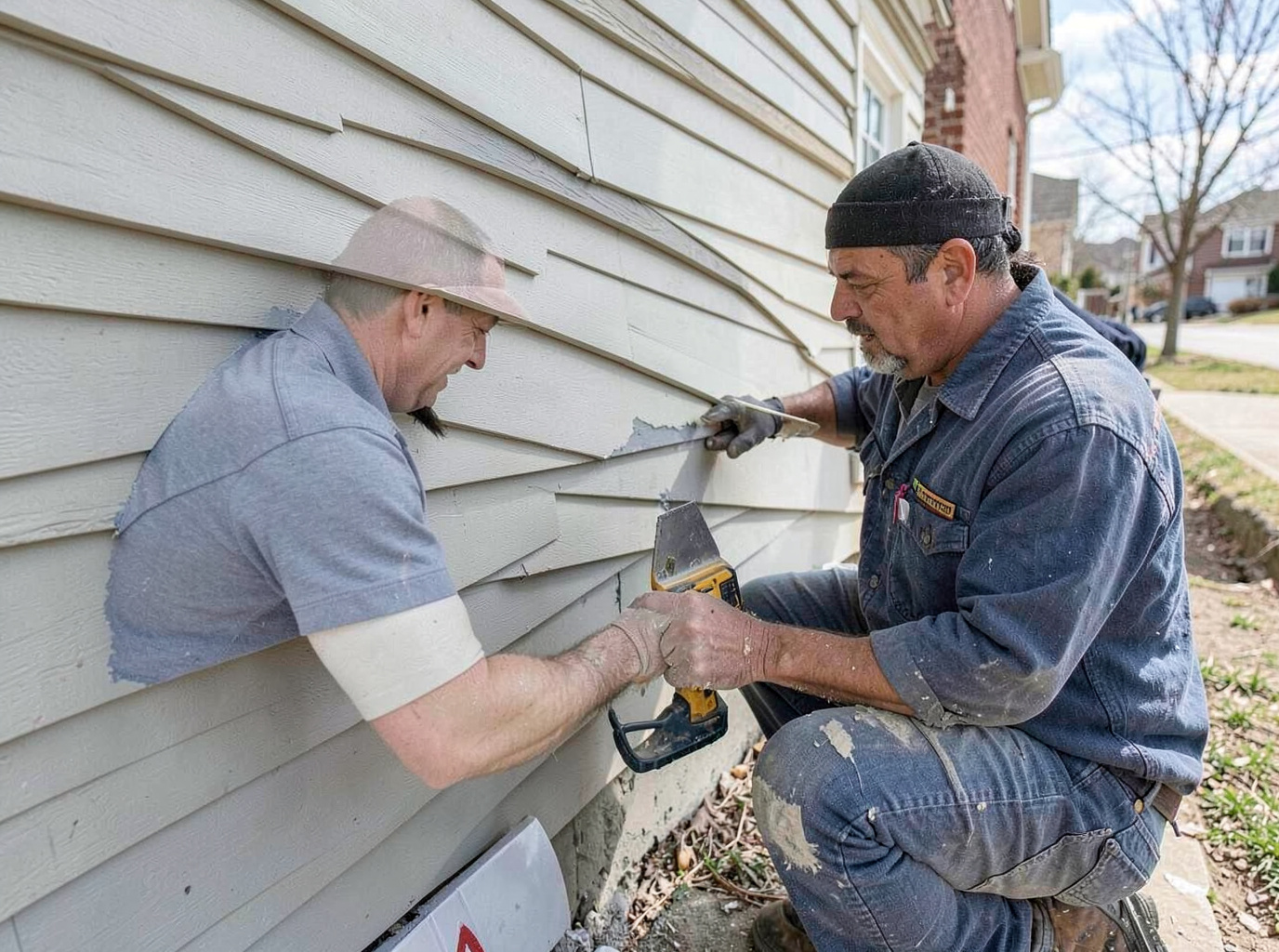
Fiber cement siding in Denton takes a beating from spring thunderstorms that bring high winds and hail, especially in neighborhoods like Southridge and Northwood where homes from the 1970s and 1980s often have original panels. Providers we connect you with know how to match the exact texture and thickness of older HardiePlank or similar boards without replacing entire walls. They also watch for hidden moisture behind joints near the Denton County Courthouse area where mature trees drop debris that traps water against the siding.
Hot summers here expand and contract the material, loosening fasteners over time in homes around the University of North Texas. Skilled local crews check for proper clearance at the foundation and rooflines, because poor drainage on the clay-heavy soil common in Denton County lets water wick up behind the boards. They use color-matched caulk and stainless fasteners rated for our humidity swings rather than generic hardware that rusts quickly.
Repairs in the Oak Street Historic District require extra care to preserve the look of older homes while meeting current wind-load standards. Providers inspect for delamination caused by repeated freeze-thaw cycles in mild winters and replace only the affected sections so the patch blends with the surrounding siding.
Storm Pattern Considerations
Spring thunderstorms in Denton often hit hardest in the afternoon, driving rain sideways into south- and west-facing walls. Local providers time repairs for drier stretches in early summer to allow proper curing of sealants.
Technician insight
In Denton, the thing that catches most people out with Fiber Cement Siding Repair is how spring thunderstorm winds drive water up under the bottom edge of boards on homes in Southridge and Northwood. Once that happens the paper backing starts to wick and the damage spreads fast if you just slap new panels over it without fixing the drainage gap.
Southridge Home After March Storms
Wind-driven rain had lifted several lower courses of fiber cement on a 1980s house in Southridge. The provider found saturated sheathing behind two panels. They replaced the affected boards, added new flashing at the base, and sealed the joints to handle Denton’s next thunderstorm season.
How it works
- 1
Initial Assessment
Providers we connect you with visit the property to document storm-related damage and check for moisture behind the fiber cement boards.
- 2
Material Matching
They source matching panels or sections that account for the age and exposure of siding on Denton homes.
- 3
Targeted Repair
Damaged areas are cut out and replaced with attention to flashing, fasteners, and joint sealing suited to local weather.
- 4
Final Inspection
The completed work is checked for weather tightness and visual match before the provider leaves the site.
Pricing
Pricing depends on the size of the damaged area, accessibility, and whether underlying sheathing needs attention.