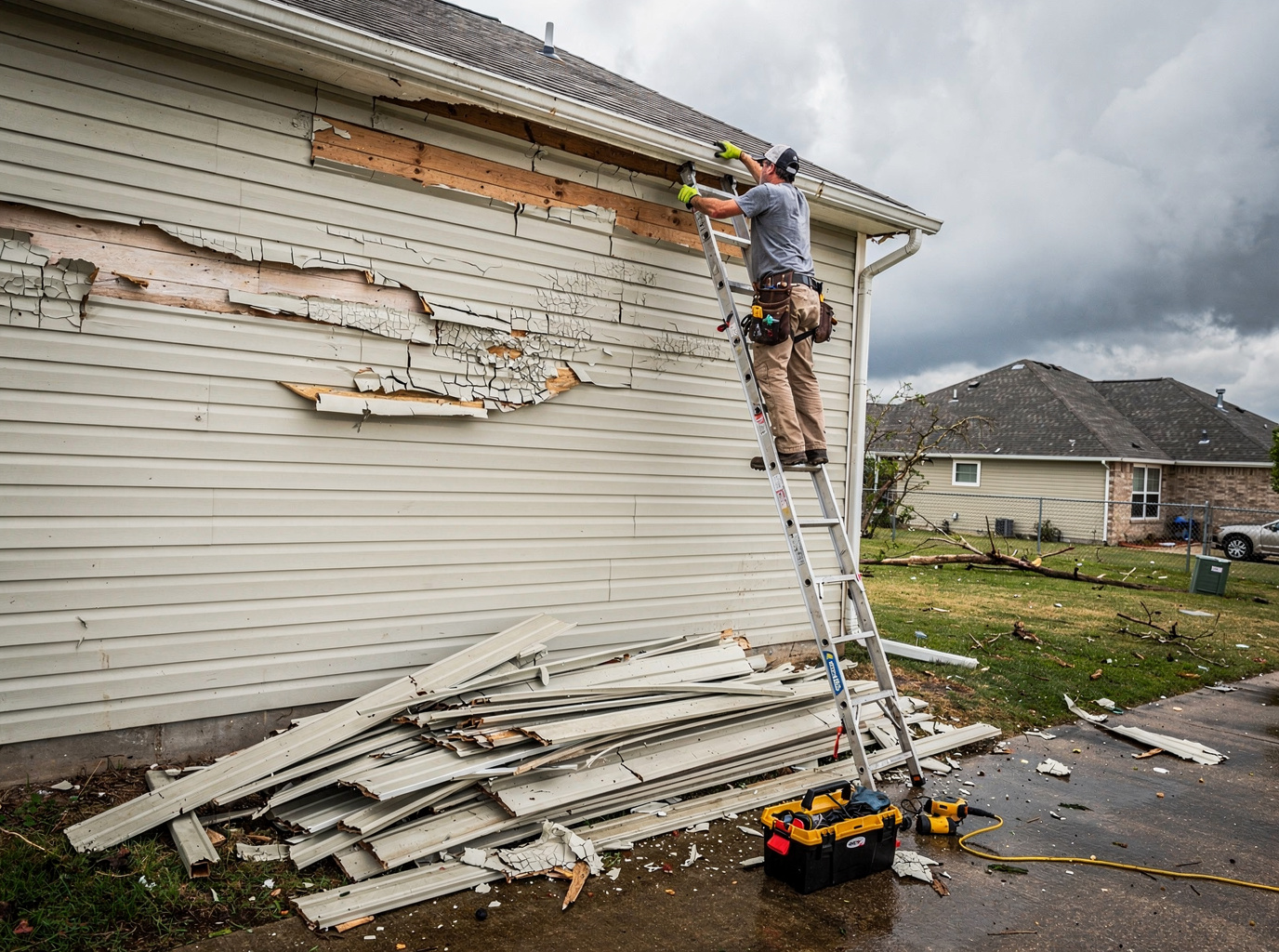
Denton homes in the Oak Street Historic District and Southridge often feature wood or fiber cement siding installed decades ago that takes a beating from the county's spring thunderstorms. High winds can loosen panels while hail dents aluminum and vinyl, allowing water to reach sheathing and insulation. Providers we connect you with start by tracing water paths from rooflines down through gable ends and around windows common on Northwood ranches and Downtown cottages.
Hot summers that follow the storms bake any trapped moisture, accelerating rot in the mild winters when freeze-thaw cycles are rare but still present. Nearby cities like Corinth and Lewisville share the same clay-heavy soils that expand and shift slightly, stressing lower courses of siding on older foundations. The connected providers match replacement boards to the original profiles still stocked by local suppliers rather than forcing modern substitutes that stand out on historic facades.
Wind-driven rain frequently finds gaps at corners and utility penetrations that standard inspections miss. Providers assess from the ground up, checking for delamination on fiber cement and checking fastener corrosion on aluminum that has been exposed for years. They coordinate with Denton permitting when work affects street-facing elevations near the Courthouse-on-the-Square or University of North Texas campus edges.
Repair sequencing matters because spring storm season can return before summer heat sets in. The providers we connect prioritize drying the wall cavity first, then replace only the damaged runs rather than entire walls when the rest of the siding remains sound. This approach keeps costs contained while restoring the weather barrier before the next line of thunderstorms moves through Denton County.
Technician insight
In Denton, the thing that catches most people out with Storm Damage Siding Repair is how spring thunderstorms drive water behind the paint on older wood siding in the Oak Street Historic District; homeowners often think only the dented boards need replacing until the provider opens the wall and finds rot two feet past the obvious damage.
Southridge Home After Spring Storm
Wind and hail stripped several courses of siding on a 1970s ranch near Southridge. The connected provider found water had reached the sheathing behind the loose panels. They replaced only the compromised runs, dried the cavity, and improved corner flashing. The home passed the next round of thunderstorms without further intrusion.
How it works
- 1
Initial Damage Walk-Through
A connected provider inspects all elevations, noting hail dents, loose panels and water stains around windows in neighborhoods like Southridge.
- 2
Moisture and Substrate Check
They open suspect areas to confirm sheathing condition and trace water intrusion paths common after Denton spring storms.
- 3
Material Matching and Scope
Replacement siding is selected to match existing profiles found on older homes near the Denton Courthouse-on-the-Square.
- 4
Repair and Weatherproofing
Damaged sections are replaced, fasteners are updated, and flashing is improved at vulnerable corners before final sealing.
- 5
Final Walk-Through
The homeowner reviews the completed work with the provider to confirm all storm-related issues have been addressed.
Pricing
Pricing varies with the amount of siding affected, material type, and whether hidden moisture damage requires additional wall work.