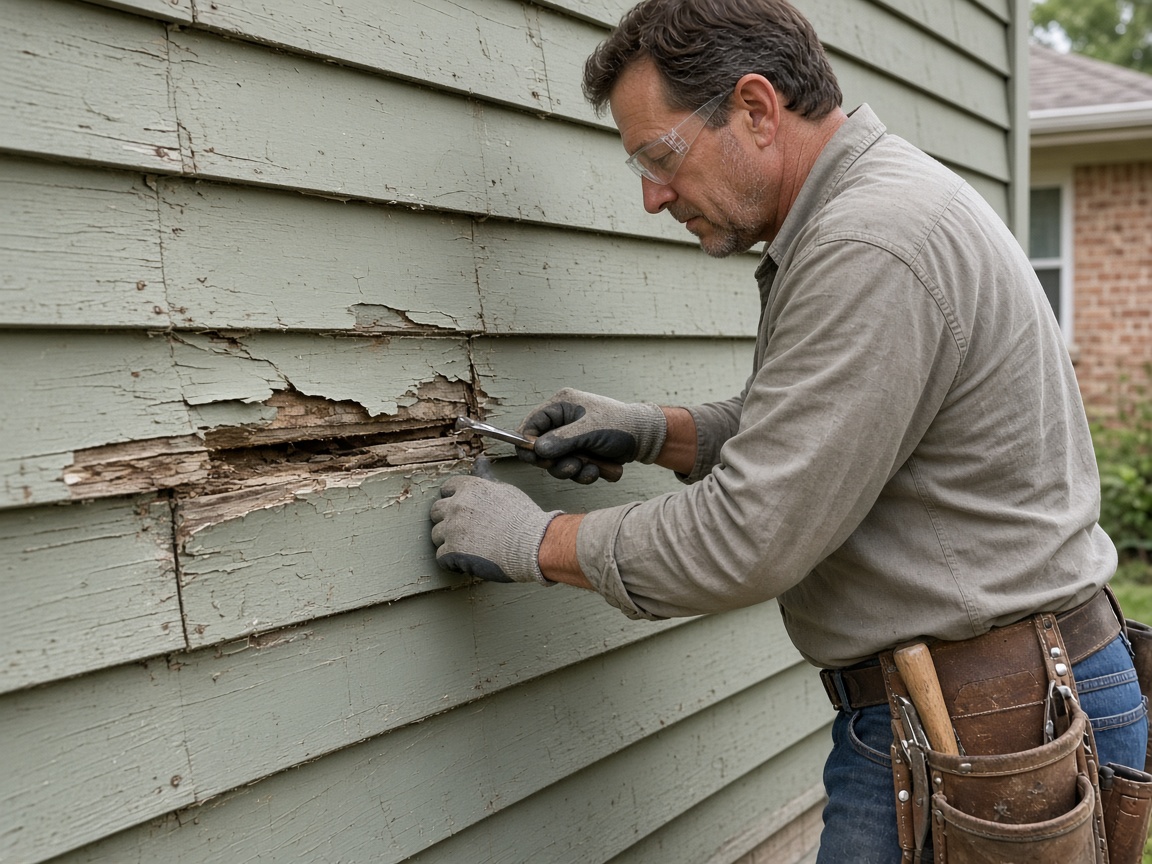
Denton homes in neighborhoods like the Oak Street Historic District and Northwood often feature older wood siding that takes repeated hits from spring thunderstorms. Hot summers accelerate drying and cracking while mild winters allow moisture to linger behind boards, leading to rot that spreads along seams near the Denton County Courthouse area or University of North Texas campus housing. Local providers match species such as cedar or pine to existing stock and address hidden water intrusion at window and door transitions common in Southridge builds.
Repair work here frequently involves removing damaged sections without disturbing sound material, then installing backer boards and flashing to handle the county's occasional heavy downpours. Providers check for termite activity that thrives in the clay soils around Sanger and Lewisville corridors. They also verify that new pieces align with the original nailing patterns to maintain wind resistance during the next storm season.
In older Downtown Denton properties, paint systems and caulking must be restored to match historic appearances while still allowing the wood to breathe. Providers avoid over-sealing that traps moisture, a frequent issue when homeowners attempt quick fixes after thunderstorms. Proper ventilation behind repaired areas prevents future cupping or splitting that shows up after summer heat cycles.
Technician insight
In Denton, the thing that catches most people out with Wood Siding Repair is how spring thunderstorms drive water behind the paint film on south-facing walls in Southridge and Northwood, creating rot that only shows after the wood starts cupping months later.
Hidden Rot After Spring Storms
A Southridge home showed loose boards following repeated thunderstorms. Inspection revealed water trapped behind the siding along the foundation line due to poor original flashing. Providers replaced the affected cedar sections, added new flashing, and restored the finish to prevent recurrence.
How it works
- 1
Initial Assessment
Providers inspect the siding for storm impact, checking for rot, loose boards, and moisture behind the surface in Denton neighborhoods.
- 2
Damage Documentation
They photograph affected areas and note material types to prepare a clear scope for the homeowner.
- 3
Material Matching and Prep
Replacement boards are selected to match existing wood species and profiles found in local housing stock.
- 4
Repair Execution
Damaged sections are removed, underlying issues addressed, and new pieces installed with proper flashing and sealing.
- 5
Final Review
The completed repair is checked for fit, finish, and weather resistance before the job is considered complete.
Pricing
Costs depend on the size of the repair, wood species, and access in Denton homes; providers supply site-specific quotes.