Denton homes in areas like the Oak Street Historic District and Southridge often feature wood or fiber cement siding installed decades ago that now faces repeated spring thunderstorm impacts. Hot summers accelerate fading and expansion while mild winters allow hidden moisture to linger behind panels. Replacement requires checking for rot at seams and ensuring new materials match the thermal movement common in Denton County stock. Providers we connect you with assess wind-driven rain patterns that hit Northwood and Downtown Denton hardest.
Replacing siding here means accounting for the clay-heavy soils around the Denton Courthouse-on-the-Square that shift slightly with seasonal rains, stressing lower courses. Many Lewisville and Sanger homes nearby share similar 1970s-1990s builds where original sheathing has degraded. Proper underlayment and flashing at gables prevent the water intrusion that reappears after heavy March storms. Local crews know to inspect attic ventilation because trapped heat from summer days worsens condensation issues behind new panels.
Storm damage often concentrates on south and west exposures in neighborhoods near University of North Texas. Replacement jobs frequently involve selective panel swaps versus full elevation work depending on hail and wind paths. Providers focus on color retention under intense UV and compatibility with existing trim profiles found in historic districts. We connect homeowners with teams familiar with these micro-conditions rather than generic approaches.
Technician insight
In Denton, the thing that catches most people out with Siding Replacement is underestimating how the clay soils around Southridge and Northwood shift after spring rains, pulling at the bottom rows and letting water in even after new panels go up. Homeowners often skip checking attic ventilation, which worsens condensation behind the siding during our hot summers.
Southridge Storm Repair
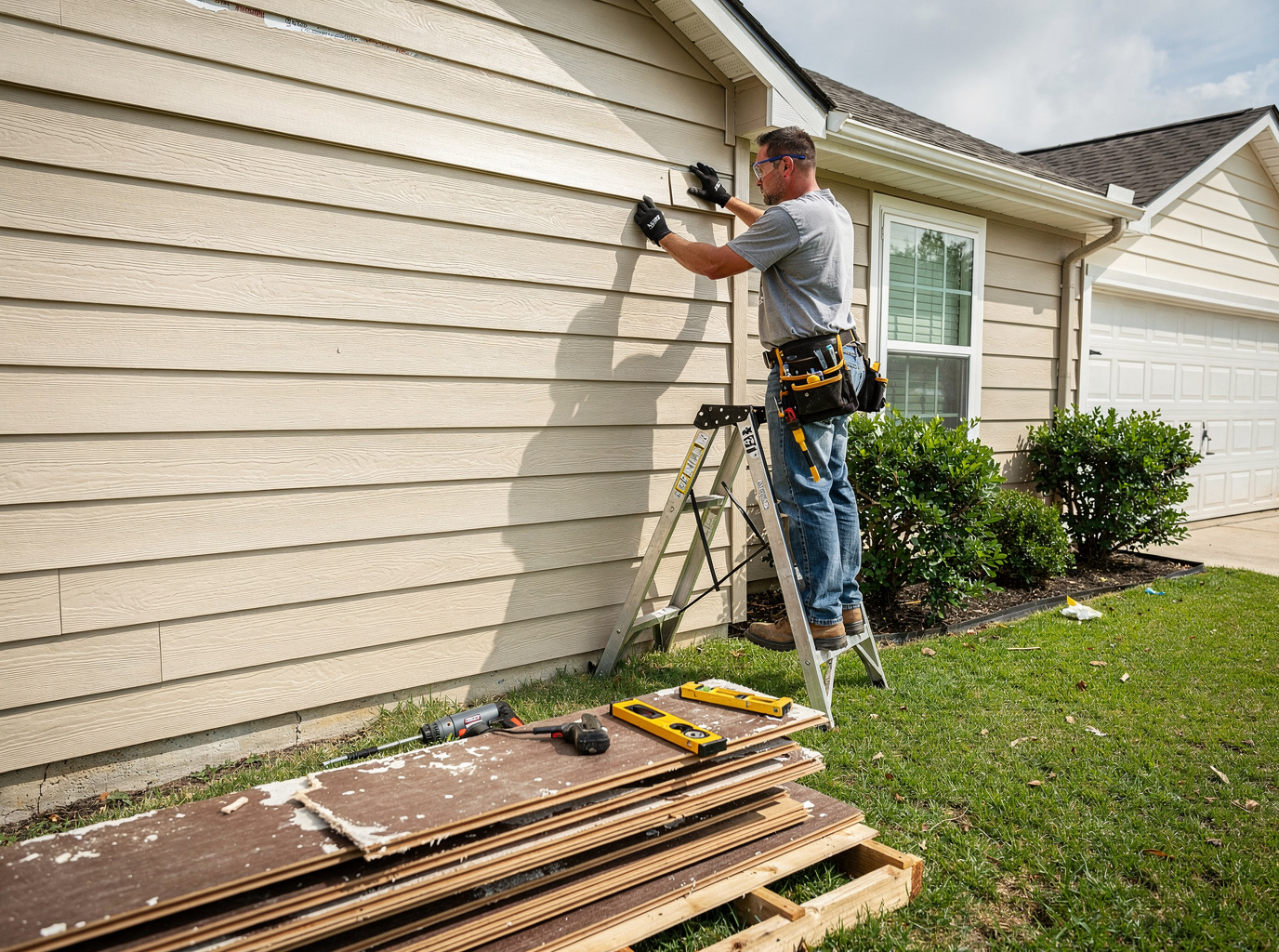
Thunderstorms had loosened panels on a 1980s home near Southridge. Inspection revealed rotted sheathing from repeated wind-driven rain. Connected providers removed damaged sections, replaced sheathing, and installed new fiber cement siding with upgraded flashing. The home now resists typical Denton spring weather without further intrusion.
How it works
- 1
Initial Assessment
Providers evaluate storm impact, material condition, and soil-related settling around your Denton property.
- 2
Material Selection
Match siding type to local climate demands including thunderstorm resistance and summer expansion rates.
- 3
Preparation and Removal
Remove damaged sections while protecting landscaping and addressing any sheathing issues from prior moisture.
- 4
Installation and Finishing
Install new siding with proper flashing and sealants suited to Denton’s spring weather patterns.
- 5
Final Inspection
Review seams, ventilation ties, and drainage to confirm the job holds up through local conditions.
Pricing
Costs depend on home size, extent of storm damage, and material choice; obtain quotes from connected local providers.